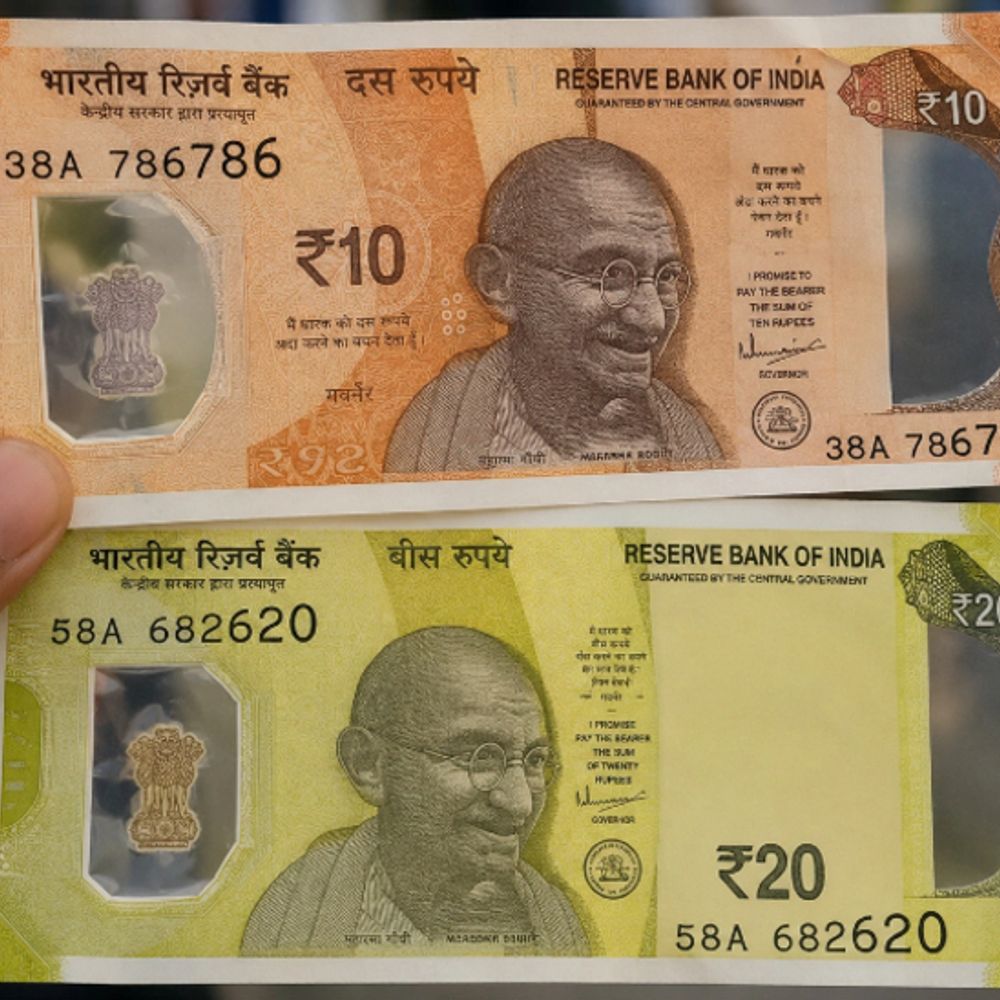
Plastic notes of ₹10 and ₹20 will soon be seen in the market. Reserve Bank will print notes made of polymer i.e. plastic worth Rs 100-100 crore i.e. total Rs 200 crore. This will be a trial of plastic currency, if it is successful then more notes will also be printed. The Central Government has approved this. Minister of State for Finance Pankaj Chaudhary gave this information in the Lok Sabha on Monday. However, the date when the trial of polymer notes will start has not been announced yet. After the successful trial of polymer banknote, RBI will regularly issue notes of both ₹10 and ₹20 denominations. However, the existing paper currency will also continue to exist. It will not be closed. 10 days ago it was told in media reports that RBI is soon going to start the first pilot project of notes made of polymer in the country. This is the next step in RBI’s plan to bring new generation currency in the country. Know important things related to this news in questions and answers… 1. What are polymer notes and why is the government bringing them? Polymer banknotes are printed on a special type of plastic material, i.e. polymer substrate, instead of paper. These are as light to touch as normal notes, but do not fade even when soaked in water and last a long time. Main reasons for bringing these – 2. When will these polymer notes come in the market? At present this is a trial i.e. pilot project. RBI’s note-printing unit has issued a global tender for the supply of polymer substrate sheets, in which the last date for submission of bids has been fixed as August 18. These notes will be seen in the market in different stages only after the tender process is completed, raw material is received and printing is done. If this trial is successful, more notes will be printed in polymer. 3. Will the old ₹10 and ₹20 paper notes be discontinued? no way. The government and RBI have made it completely clear that with the introduction of polymer notes, old paper notes will not go out of circulation. 4. When was the polymer note proposed? 5. In which countries of the world do plastic notes circulate? Polymer banknotes have been put into circulation in more than 60 countries of the world. These include countries like Australia, Canada, United Kingdom (UK) and New Zealand. RBI issued global tender: RBI’s note-printing unit issued ‘Expression of Interest’ (EOI) at the global level a few days ago. This tender has been invited for the manufacturing and supply of a special type of ‘Polymer Substrate Sheet’, which is used to print these notes. According to the documents, manufacturers from across the world have been invited to supply polymer substrate equipped with advanced safety features. The last date for submitting bids under this tender has been fixed as August 18. What is expression of interest? This is a kind of global tender document, through which the Reserve Bank invites experienced and qualified companies from around the world to send proposals with their capacity, technology and prices for the project. New notes will not tear, will be safe from water and dust. Banknotes made of polymer are much more durable than traditional paper notes. These notes remain safe even in water, dirt and dust. Apart from this, these notes do not tear easily. Because of this, they remain unbroken and clean in the market for a long time. The biggest advantage of polymer sheet is that advanced safety features can be easily added to it. This makes it almost impossible for fraudsters making fake notes to copy them, which will further strengthen the country’s security system. Also read this news… Bank of Baroda customers’ data leaked on dark-web: More than 700GB of internal documents and audit records leaked; The bank is conducting forensic audit. Personal data of Bank of Baroda customers and internal documents of the bank have been leaked on the dark web. Sources and cybersecurity researchers related to the case gave this information. According to Srikant L, founder of Cashless Consumer and cybersecurity researcher, the leaked data includes personal details of customers, identification documents, loan related papers and internal audit records of the bank. Read the full news…
Source link