- hindi news
- Business
- China’s NEO Brain Chip Beats Elon Musk’s Neuralink To First Commercial BCI Sale
Beijing4 hours ago
- copy link
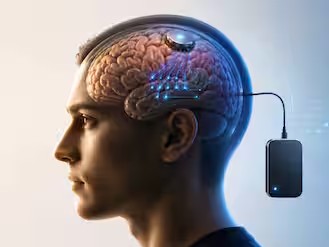
China has left Elon Musk’s company Neuralink behind in the race to commercialize brain-computer interface (BCI) technology. China has approved the world’s first commercially used brain chip ‘NEO’ after successful clinical trials.
According to the New York Times report, this coin-sized implant has become the world’s first surgically implanted BCI device to pass clinical testing for commercial use.
Developed by Beijing’s Tsinghua University and Neural Technology
This modern device has been jointly developed by researchers from Beijing’s Tsinghua University and Shanghai-based Neural Technology.
After getting regulatory approval, it is now expected that this device will be manufactured on a large scale for China’s government healthcare system.
Paralyzed patients will get help in the first phase
The first version of the NEO chip is primarily designed to help patients who are suffering from spinal cord injury and paralysis. This device will help such patients to regain control over some parts of their nervous system.
However, researchers, tech companies and investors are seeing this technology as the beginning of a huge change in the interaction between humans and machines.
Elon Musk’s Neuralink awaits approval
This development has come at a time when Elon Musk’s company Neuralink is conducting trials on humans in America, but has not yet received regulatory approval for commercial use.
Musk recently called his technology ‘Jesus-level technology’ while speaking through video link during an event in Israel.
Musk believes that it is a big thing to give back control and eyesight to paralyzed people. Neuralink claims that with its implant people will be able to type and move the computer cursor just by thinking.
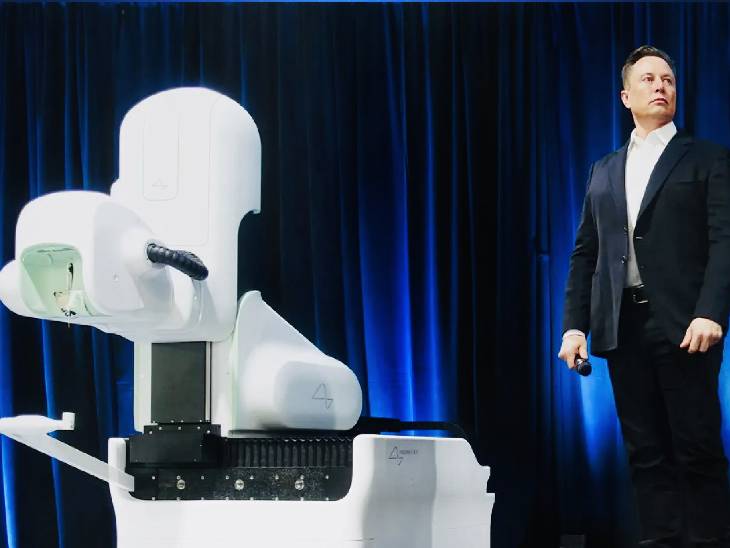
Neuralink’s surgical robot, through which the chip is implanted in the brain.
How is China’s NEO implant different from Neuralink?
Analysts believe that the main reason for China’s rapid progress is the special design of NEO implant. Where Neuralink’s N1 device requires electrodes to be inserted deep into the cerebral cortex of the brain. Whereas China’s NEO device sits between the skull and the brain.
In this, eight sensors are placed over the protective outer membrane (dura mater) of the brain, due to which there is very little incision in surgery. This implant captures brain signals and sends them to a nearby computer, where they are converted into digital commands.
Successful testing on 36 patients, beneficial in serious diseases
According to reports, till now this device has been tested on 36 patients, for which very positive results have been obtained. Experts say that with this less invasive method, medical risks are significantly reduced.
Apart from paralysis, this technology can improve the lives of millions of people suffering from brain and nerve related diseases like Parkinson’s, epilepsy, stroke and depression.
The risk of privacy and hacking also increased
Amidst the positive aspects, this technology has also raised serious concerns regarding security and privacy. Griffith University’s cyber security expert Dr. David Tuffley says that these devices are as helpful as they are risky.
He warned that theoretically hackers could access patients’ sensitive neural data, such as their thoughts and memories, through these devices. Not only this, the patient’s concentration can be affected through hacking or their movement signals can also be manipulated.
The patient involved in Neuralink trial shared his experience
On the other hand, Neuralink’s N1 implant is currently being tested on 9 patients. Audrey Cruz, who was a part of this trial, while sharing her experience on social media platform X, wrote that I have tried to write my name for the first time in 20 years, I am working on it.
It feels proud to know that my journey is helping Neuralink improve this technology that will one day allow millions of people to control devices with their brains.
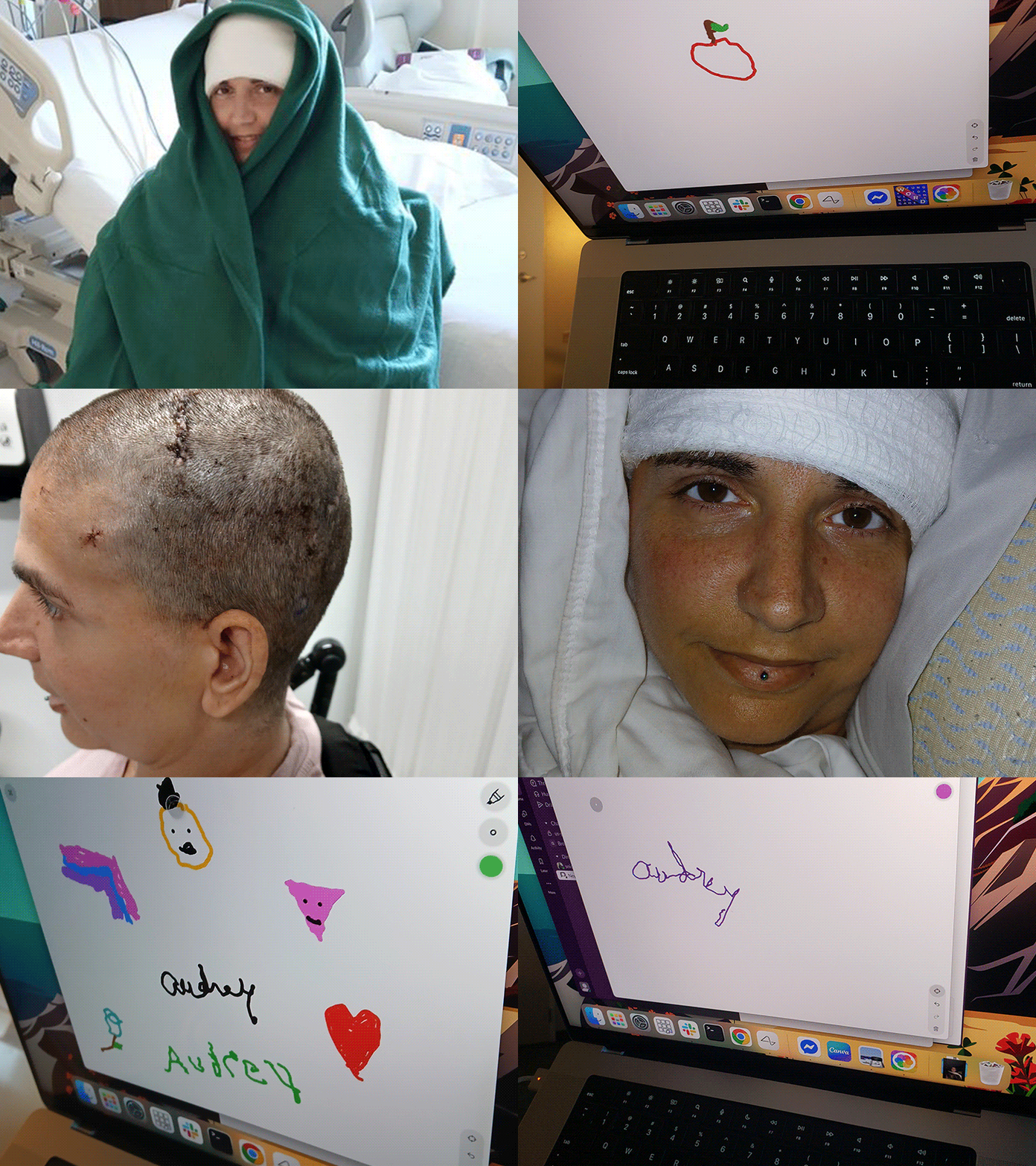
11 months ago, Audrey Cruz, who was paralyzed for 20 years, became the first woman in the world to control a computer through Neuralink brain implant. Some photos of which were shared from Audrey Cruz’s social media platform X.
Neuralink got approval for human trials in 2023
In September 2023, Musk’s brain-chip company Neuralink received recruitment approval from the Independent Institutional Review Board for its first human trial. Since the approval, this device is being tested on people by recruiting them for Neuralink human trials.
According to Neuralink, the trial is being conducted on people who have quadriplegia due to cervical spinal cord injury or amyotrophic lateral sclerosis (ALS). The study will take about 6 years to complete. During this period, the participants are being given travel expenses to and from the lab.
Through trials, the company wants to see how this device is working on patients. In May 2024, the company received approval from the US Food and Drug Administration (FDA) for the trial.
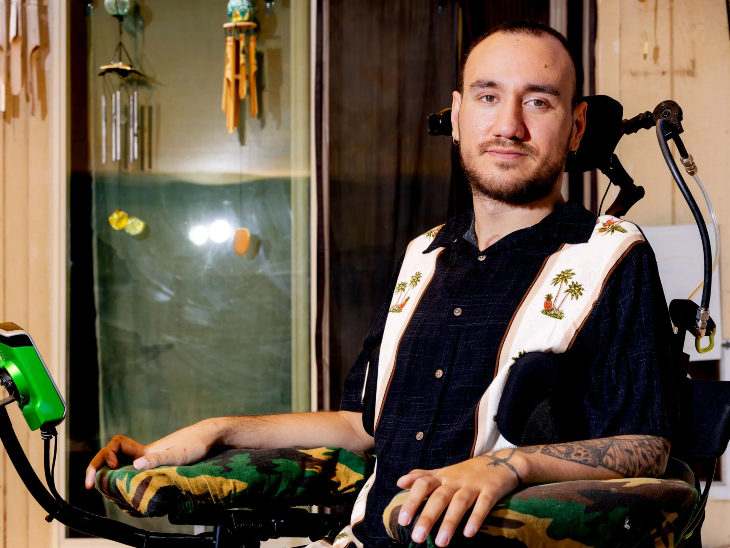
The Neuralink chip was first implanted in the brain of a man named Noland Arbaugh in January 2024. After an accident in 2016, he was paralyzed from the neck down.
What is the Neuralink device?
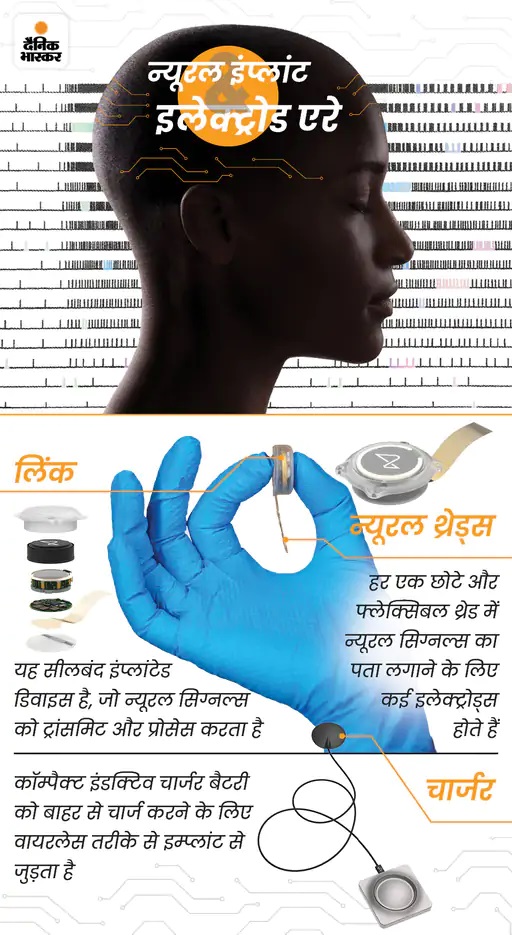
1. Will connect the phone directly to the brain Neuralink has created a coin-sized device called “Link.” This device enables direct control of a computer, mobile phone or any other device through brain activity (neural impulses). For example, a person suffering from paralysis will be able to move a mouse cursor by simply thinking about how they want it to move after having a chip implanted in the brain.
2. Cosmetically Invisible Chip “We are designing a fully implantable, cosmetically invisible brain-computer interface, so you can control a computer or mobile device wherever you go,” Neuralink said. Micron-scale threads will be inserted into areas of the brain that control movement. Each thread has several electrodes that connect them to the implant, called “links.”
3. Robotic system design The company said that the threads on the links are so fine and flexible that they cannot be inserted by a human hand. For this, the company has designed a robotic system through which the thread can be implanted firmly and efficiently.
Along with this, the Neuralink app has also been designed so that you can control your keyboard and mouse directly through brain activity just by thinking about it.
The device will also need to be charged. For this, a compact inductive charger has also been designed which connects to the implant wirelessly to charge the battery externally.
Musk made chip with brain-computer interface technology
The technology through which Elon Musk has created the chip is called Brain-Computer Interface or BCIs in short. Many other companies have also been working on this for years.
This system uses tiny electrodes placed in the brain to “read” signals from nearby neurons. The software then decodes these signals into commands or actions, such as moving a cursor or a robotic arm.
What is Brain-Computer Interface (BCI) technology?
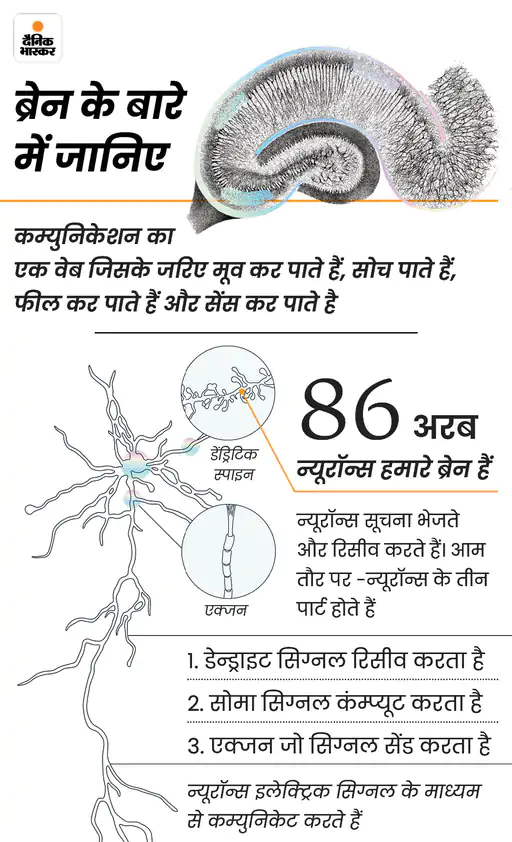
Brain-computer interface is a technology that creates a direct communication path between the human brain and external devices (such as a computer, robotic arm, or wheelchair).
When we think about something, electrical signals are generated in the brain. The BCI device reads these signals and converts them into digital commands, so that the patient can operate the computer or machine just by thinking without moving hands and legs.