
11 minutes ago
- copy link
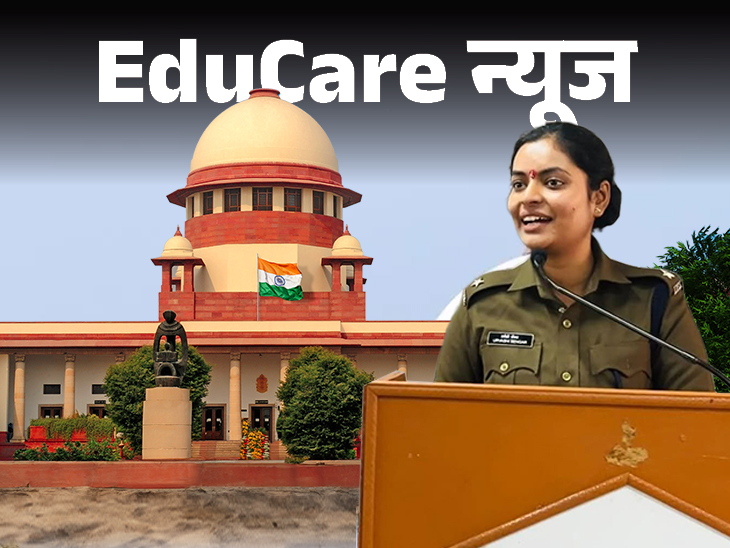
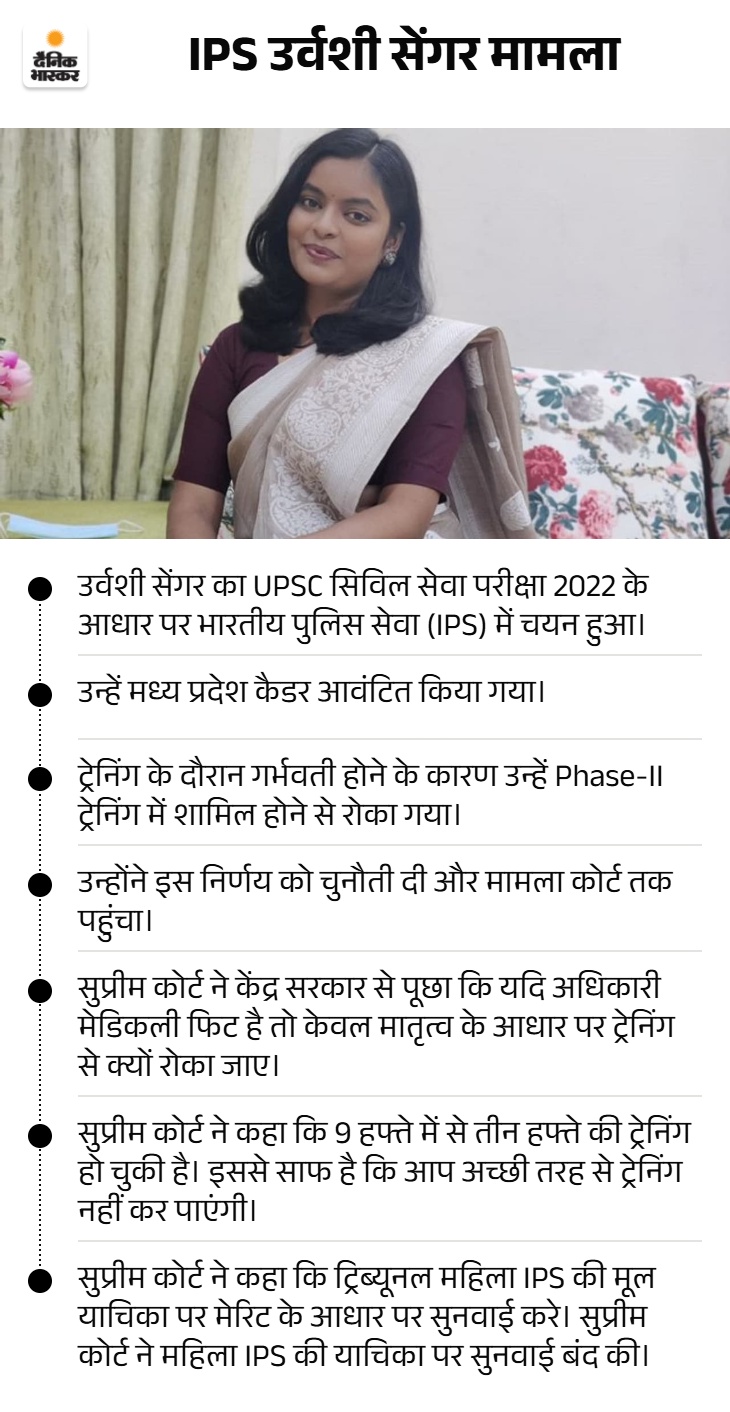
Urvashi Sengar, a 2023 batch IPS officer of Madhya Pradesh cadre, has filed a petition in the Supreme Court for not getting permission for her training after pregnancy.
Actually, Urvashi became pregnant during the probation period. As per the current rules of IPS training, in such a situation one has to leave the training with one’s original batch and join another batch after the birth of the child.
Pregnant officers are also exempted from physically demanding activities such as horse riding, long distance running and combat training.
What did the Supreme Court ask?
During the hearing of the case, the Supreme Court raised questions about the logic behind the existing rules. The bench asked the Center why a woman officer, who was declared medically fit after delivery and was willing to undergo training, should be prevented from completing her probation period.
The court also raised the question of whether motherhood should become a hindrance to an officer’s career progression, especially when there is no medical problem preventing resumption of training.

Supreme Court hears challenge to a 1993 Office Memorandum of the Ministry of Home Affairs that prevents women IPS probationers from joining training for a year after childbirth despite claiming to be medically fit. (Urvashi Sengar v. Union of India). Bench: Justices Manoj Misra… pic.twitter.com/AyFySaZOyr— Bar and Bench (@barandbench) July 10, 2026
Court closed the hearing
The Supreme Court refused to order Urvashi Sengar to be included in the ongoing training. The court said that out of 9 weeks, three weeks of training has been completed. It is clear that you will not be able to train well. However, the court took on record the statement of the Central Government that this will not affect the seniority of women IPS.
Along with this, the Supreme Court has directed that the Central Administrative Tribunal (CAT) should hear the original petition of the woman IPS on the basis of merit.

Why challenge the old rule of 1993?
In the petition filed in the Supreme Court, it has been said that in today’s time such decisions should be taken on the basis of modern medical science and individual medical fitness instead of old rules.
This rule of 1993 applies equally to all pregnant officers without any discrimination and no distinction has been made between Phase-1 and Phase-2 training.
Phase-2 mainly consists of classroom based learning, academic modules and institutional training, which is not very physically demanding. Therefore, it is not right to exclude only on the basis of pregnancy.
In the year 2004, the Department of Personnel and Training (DoPT) had changed this old rule for women IAS officers, under which now women IAS probationers are allowed to complete training on the basis of medical fitness. In such a situation, keeping the old rule of 1993 applicable for IPS officers is against the principle of equality.
————-
Read this news also…
Didn’t get job even after 500 applications: Graduate with first division degree in Computer Science, now earning from Rapido

If you do not get a job after studying computer science, then it is wise to look for new job opportunities instead of sitting defeated. This can be understood from the story of this Rapido rider. A Twitter user shared this story on his account. The name of this user is Neeraj. Read full news here