
New Delhi2 hours ago
- copy link
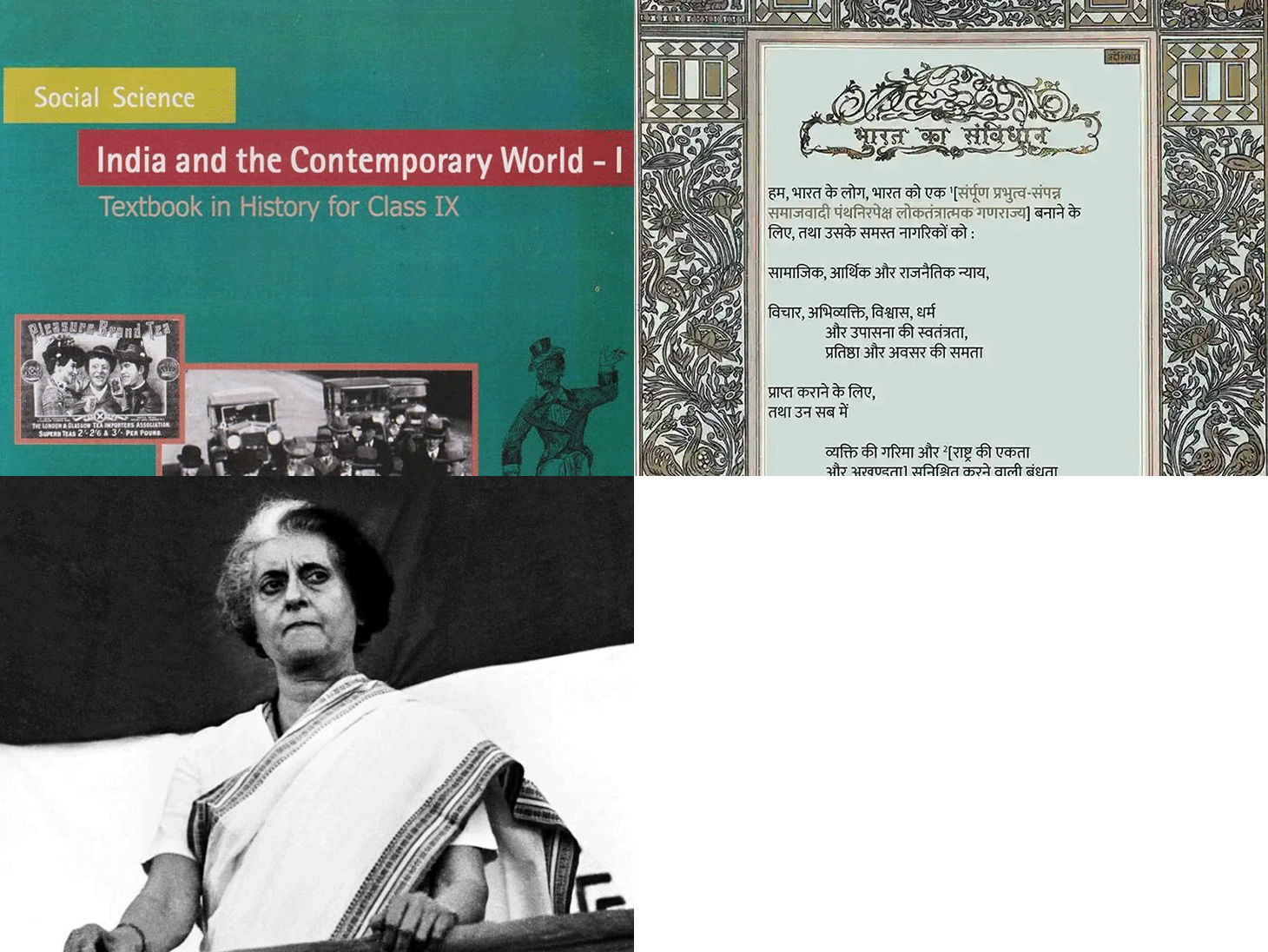
NCERT has added a new chapter on Special Intensive Revision (SIR) and Emergency in the Class 9 Social Science book. The book states that the main functions of SIR are to update the voter list, verify voters and remove errors in the voter list.
With the help of the chapter, students will also be explained that the electoral process can be made more robust by inspecting the voter list.
At the same time, the Preamble of the Constitution has been removed from the book. Apart from this, the words socialist and secular are also not mentioned. A separate section has been added to the book.
This information came to light on Thursday. In the book’s ‘Understanding Society: India and Beyond’ chapter, the Emergency has been described as one of the biggest challenges faced by democracy.
Jayprakash Narayan’s movement also mentioned
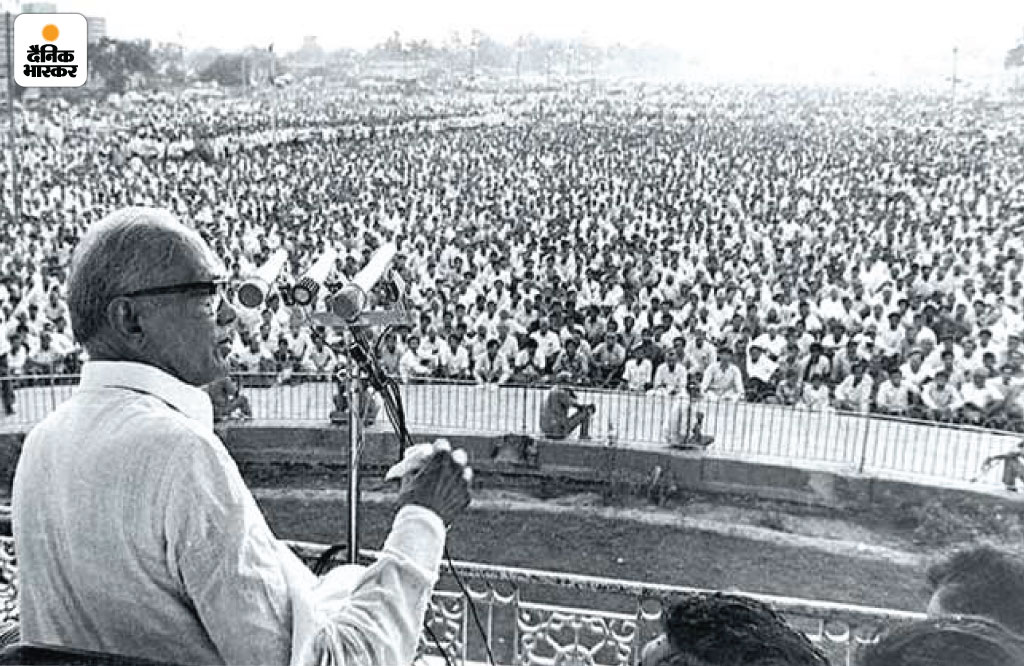
Jayaprakash Narayan addressing the people at Ramlila Maidan in New Delhi on 25 June 1975.
However, it discusses the Constitution through its making, democratic institutions and fundamental rights, but does not mention words like Sovereign, ‘Socialist’, ‘Secular’, ‘Democratic’ and ‘Republic’.
The role of Loknayak Jaiprakash Narayan has also been explained in detail in the 9th book. It says that he organized students and common people and led large mass movements in Bihar, as well as Gujarat.
According to the book, after the end of the Emergency in 1977, general elections were held. The public expressed its opinion through voting and the ruling government lost the election. In the book it has been described as an example of the strength of Indian democracy.
‘Secular’, ‘Socialist’ and ‘Integrity’ were added to the Preamble of the Indian Constitution through the 42nd Constitutional Amendment (1976), made during the Emergency during the tenure of former Prime Minister Indira Gandhi. Earlier these were not in the Constitution. But these words are still present in the Constitution.
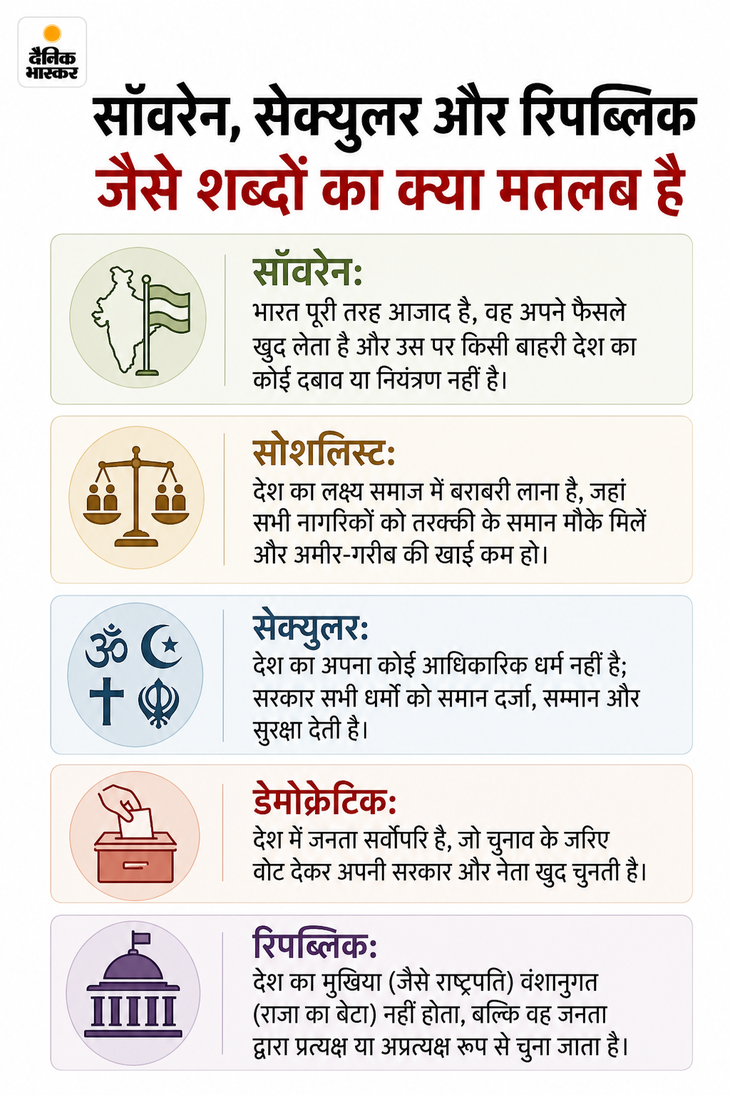
Written in the book- Resentment increased among people against Indira government
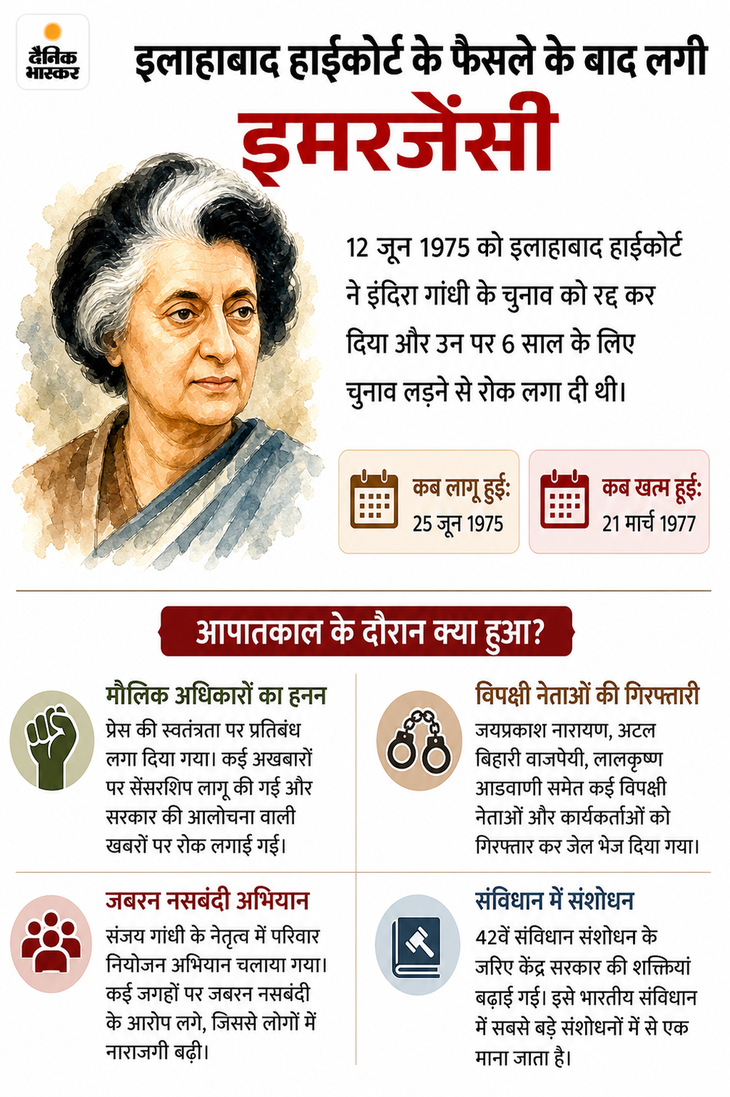
It is written in the book that in the early 1970s, there was increasing resentment among the people against the Indira Gandhi government. There were protests at many places due to allegations of unemployment, inflation and mismanagement. After this, National Emergency was imposed in June 1975 on the basis of internal unrest.
According to the book, during this period most of the fundamental rights were suspended, censorship was imposed on the press and many political leaders and activists were arrested. It is said in the book that during this period, pressure on democratic institutions increased and people’s freedom was limited.
Democracy also faces other challenges
- Apart from the Emergency, other challenges facing democracy have also been discussed in the book. These include fake news, misinformation, damage to public property, violation of rules, poverty, regionalism, social discrimination and gender inequality.
- NCERT has also added a new section named ‘Democracy and You’ for the first time. Its purpose is to make students understand their role in the democratic process.
- ‘Secular’, ‘Socialist’ and ‘Integrity’ were added to the Preamble of the Indian Constitution through the 42nd Constitutional Amendment (1976), made during the Emergency during the tenure of former Prime Minister Indira Gandhi.
- The book also has a special focus on India’s democratic traditions and institutions. It has been told that the tradition of democratic thinking and participation in India is very old. A separate section has also been given on the role of media. In the book, media has been described as the ‘fourth pillar’ of democracy and it has been said that it plays an important role in raising the voice of the public and protecting democratic values.
Manusmriti’s verse also in new book
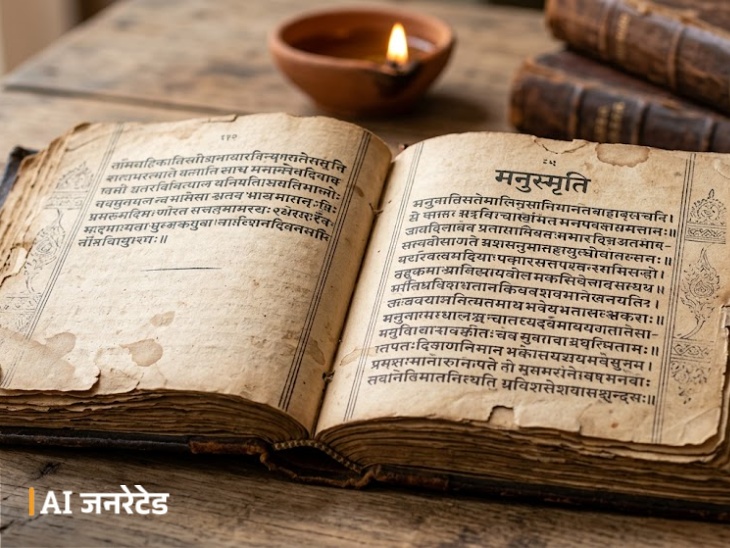
NCERT has included a verse from Manusmriti in the new Social Science book for Class 9 to explain the status of women in the Vedic period. It is said in the book that during the Vedic period, women had a respectable position in the society. Along with this, it has also been made clear that his condition fluctuated with time and even weakened in the later stages.
The chapter State and Society up to 1000 CE notes that the Vedic period is often considered a time when women enjoyed a high and respectable position in society. According to the book, women received education, participated along with men in some religious rituals, attended public meetings and many hymns of the Rigveda are attributed to female sages like Apala, Vishvavara, Ghosha and Lopamudra.
After this, verse 3.56 of Manusmriti has been quoted in the book. It says – Where women are respected, the gods are pleased and where they are not respected, all religious activities become fruitless.
Giving the example of a mantra from the Rigveda, NCERT has written – I am a poet, my father is a physician and my mother grinds grains. Through this, the book mentions different professions within the same family.
Election Commission praised in NCERT book
The country’s Election Commission (ECI) has also been praised in the Class 9 Social Science book. It has been said in the book that conducting elections in India is one of the biggest tasks in the world. Despite this, the Election Commission tries to conduct fair elections.
In the ‘Elections’ chapter of the new book ‘Understanding Society: India and Beyond – Part 1’, it has been told that in 2024 there were more than 96.8 crore voters in the country. It is not easy to conduct elections on such a large scale, because the geographical and social conditions are different in different parts of the country.
It has been said in the book that conducting elections in such a big country is a challenge in itself. Apart from this, problems like fake news, spreading wrong information and intimidating voters also come to the fore. To deal with these, the Election Commission uses RPA law, Model Code of Conduct, EVM, VVPAT and voter awareness campaigns.
It has been said in the book that the efforts of the Election Commission alone are not enough. People’s awareness and participation is also necessary for fair elections. The more alert the citizens are, the stronger the democracy will be.
It is said in the chapter that political parties are an important part of democracy. They present different policies and schemes to the people, so that the voters can decide their choice. Students have also been asked to study the winning alliances in the Lok Sabha elections held from 1977 to 2024.
………………………
Read this news also…
The statue was naked, NCERT covered it and published: Decision to change after controversy; The bronze statue was found during the excavation of Mohenjodaro in 1926.
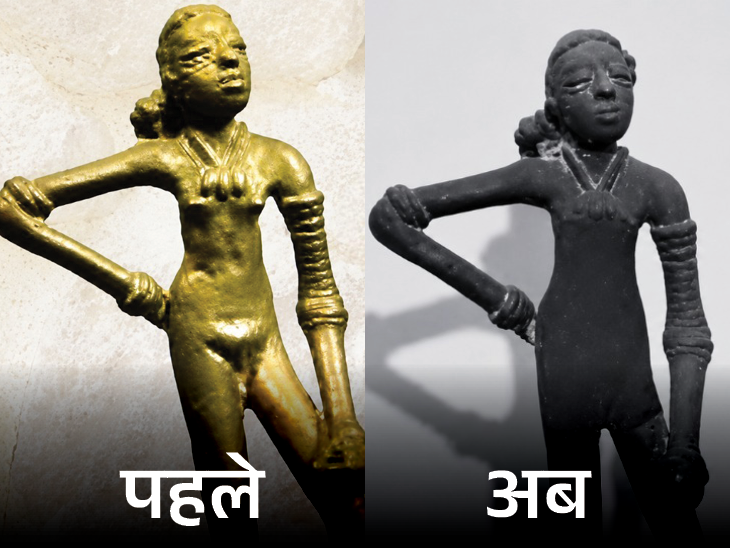
The photo of the bronze dancer statue found in the excavations of Mohenjodaro has been published in an altered form. There is a photo of the idol’s torso covered in the NCERT book. The color of the idol has also been changed. According to the report of The Indian Express, the picture of the dancer is given in the first chapter ‘History of Arts’ of the 9th class book ‘Madhurima’. The part below the shoulders is covered in the photograph, whereas in the original statue this part appears uncovered. The original form of this bronze statue, which has been in print for 25 years, had never been changed before. Read the full news…