
- hindi news
- Career
- SC Probe CBSE 3 Language Rule | Student Pressure Hearing July 1, 2026
2 hours ago
- copy link
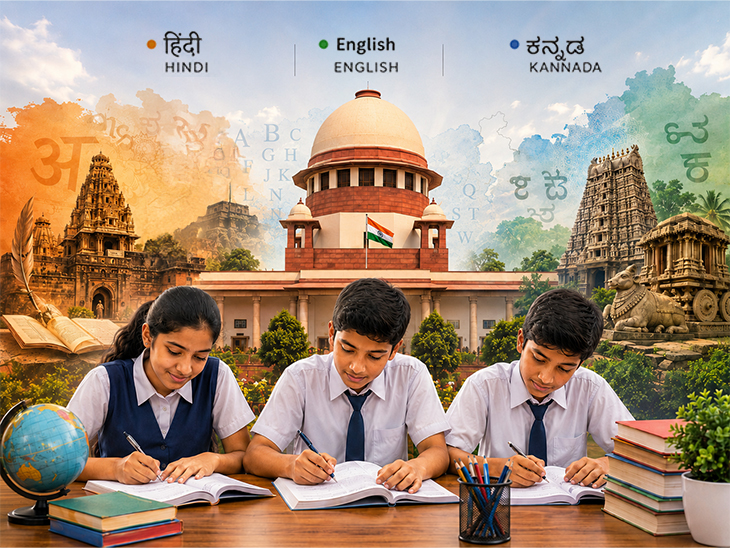
On May 27, the Supreme Court, in its hearing on the three-language rule in CBSE Class 9, said that the decision to implement the three-language rule will be investigated. SC also said that it has to be seen whether there is unnecessary pressure on students and resources due to the three-language rule of CBSE.
A three-judge bench led by CJI Surya Kant said that the ground and systemic difficulties in implementing this policy need to be understood, especially when there is a shortage of both teachers and books.
Answer sought from CBSE and NCERT
The court has issued a notice to the Central Government, CBSE and National Council of Educational Research and Training (NCERT) and sought their response on the petition challenging the three language rule.
CBSE The next hearing on the three-language rule will be held on July 1. Earlier the date of June 15 was fixed, but on the request of Additional Solicitor General Aishwarya Bhati, it has been kept in July.
On May 22, some petitioners had filed a PIL against the implementation of the three-language rule from this session.
CBSE implements third-language rule in class 9 from this session
CBSE has decided to implement the three-language formula for class 9th from this session. For this, CBSE had issued a circular on May 15 giving this information. According to the circular, this is to be implemented for class 9th from July 1. The notification for this will be applicable from July 1 and students have been given time till May 31 to choose the third language.
CBSE said- there will be no board exam for third language
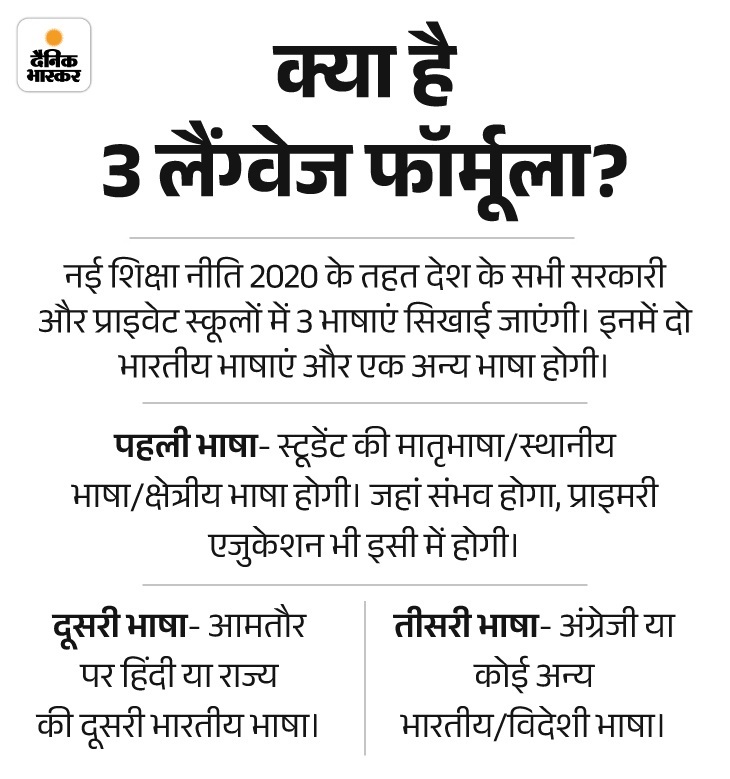
In the circular issued on May 15, it was said that out of the three languages, at least two should be Indian languages. These rules are part of the National Education Policy i.e. NEP-2020 and National Curriculum Framework for School Education 2023.
However, CBSE also clarified that there will be no board exam for third language in class 10. “Complete evaluation of R3 (third language) will be done at the school level and internally,” the board said in the circular. The performance of the students will be recorded in the CBSE certificate.
‘If you fail in third language, you will not get 10th class certificate’
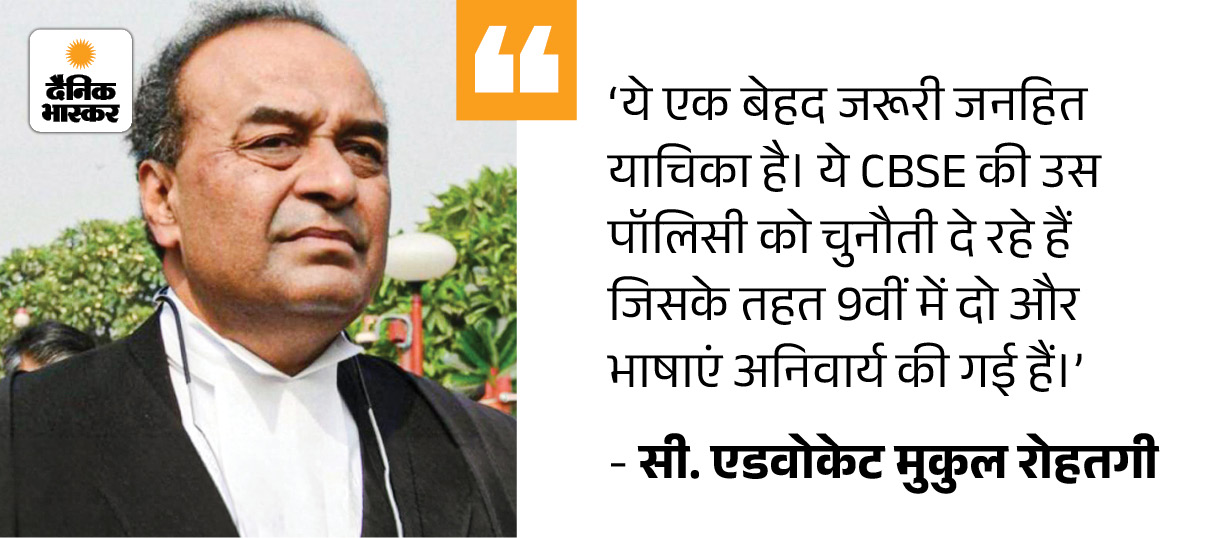
The CJI asked whether any examination would have to be given in class 10th under this policy. Advocate Mukul Rohatgi, appearing for the petitioners, said that there will be an ‘internal assessment’ for this.
Rohatgi said, ‘This will be reflected in your final certificate. You have to prove that you have passed it. Unless you pass this paper, you will not get the class 10th certificate.
CBSE’s three language policy was challenged in the Supreme Court on Friday by a group of 19 people. These include students, parents and teachers.
This petition was filed against the implementation of three language policy in class 9th. SC will hear against this next week. On May 15, CBSE had issued a circular to implement the three language policy from the academic session 2026-27.
Its notification will be effective from July 1 and students have been given time till May 31 to choose the third language.
The bench of Justice Joymalya and Justice Vipul M Pancholi will hear the matter. Senior advocate Mukul Rohatgi presented the case on behalf of the parents. The batch of Justice Joymalya and Justice Vipul M Pancholi will hear this.
The Supreme Court can hear this matter on Monday. About 50 lakh children of 9th and 10th classes will be affected by this decision.
The allegations of the petitioners were countered by CBSE.
The petitioners say that this decision is completely contrary to the earlier decision of CBSE. CBSE had clearly said on April 9 that the third language rule (R3) will not be applicable to class 9 students till the session 2029-30.
In the petition, CBSE and NCERT have been accused that this is an arbitrary decision. Parents and teachers say that CBSE itself has already admitted that there is a shortage of trained teachers and textbooks, yet pressure is being put on schools to implement it.
He also said that good and meaningful education does not mean just imposing a new subject, especially when the necessary infrastructure, trained teachers and teaching system are not available.
The petitioners also say that this circular is against the spirit of the New Education Policy 2020. It is clearly stated in NEP that no language will be imposed on any state or student.
Three language policy mandatory for 9th, 10th class
In the circular issued on May 15, CBSE had made three language policy mandatory in classes 9th and 10th in all its schools. Under this, children of class 9th and 10th will have to study three languages. Of these, 2 should be Indian languages.
CBSC notification will come into effect from July 1. This decision will affect about 50 lakh children of class 9th and 10th together. Also, this year class 10th students will not have to give third language paper.
Schools will choose third language by June 30
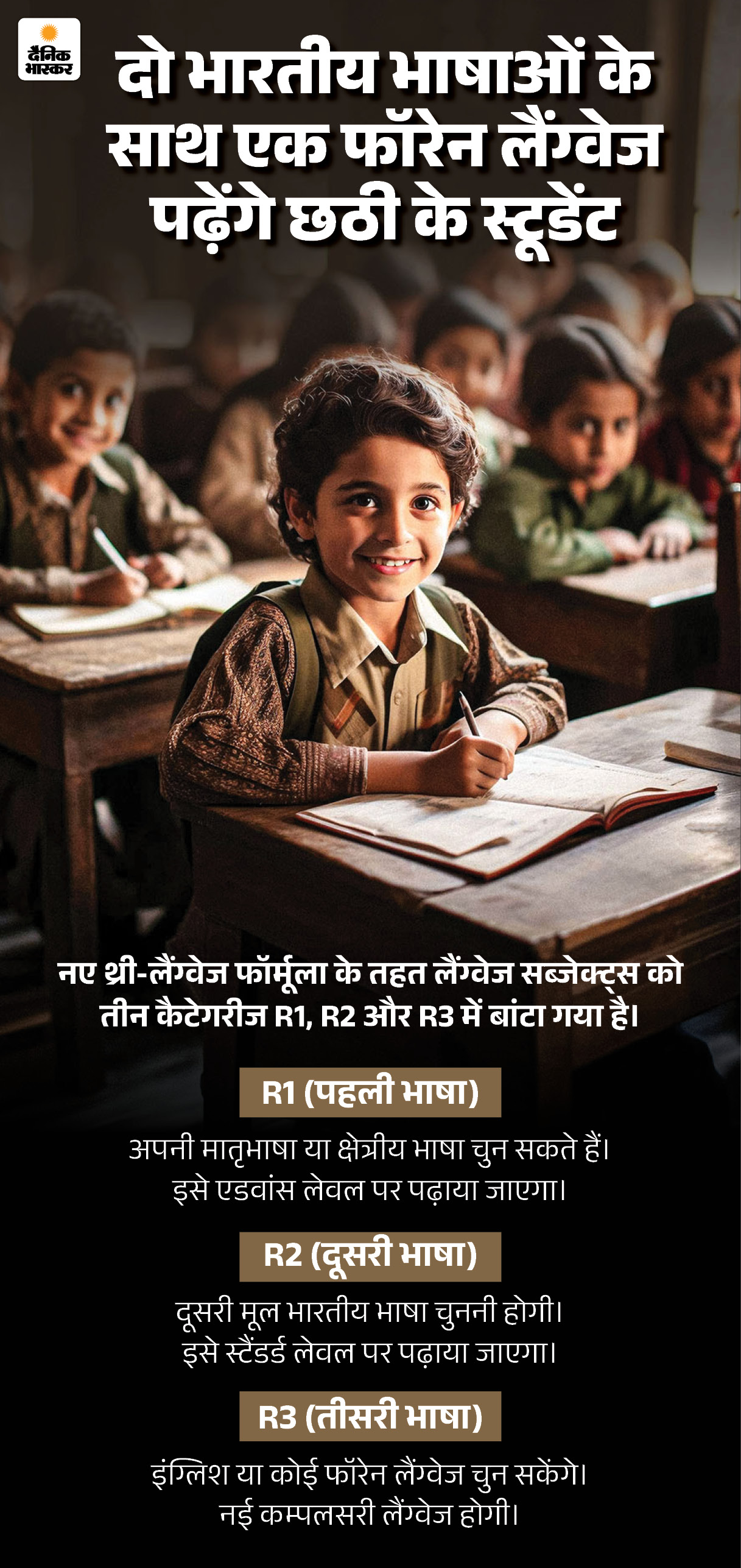
Under the Three Language Policy, one regional language is to be taught along with one Indian and one foreign language. CBSE has clarified that schools can choose the third language as per the choice of the students. All schools will have to give information about their chosen language to the board by June 30.
The board said that this decision regarding language has been taken after looking at the recently released NCERT syllabus for 2026-27. This session has started from April 2026. But schools have been instructed to start teaching third language from July 1.
There will be no third language paper in class 10th
CBSE has made it clear that there will be no third language paper in the 10th board exam this year. However, it will be important for students to study it. Until new third language books are available, Class 9 students will study from Class 6 third language books.
Schools have also been asked to provide local and state level literature for studies. It will include poems, short stories and other literary material.
Instructions to make books available in schools from July 1
CBSE acknowledged that some schools may find it difficult to arrange qualified teachers for languages of Indian origin. In such a situation, schools have also been given permission to provide hybrid teaching support, appointment of retired language teachers and hiring of qualified post graduate teachers through inter school resources.
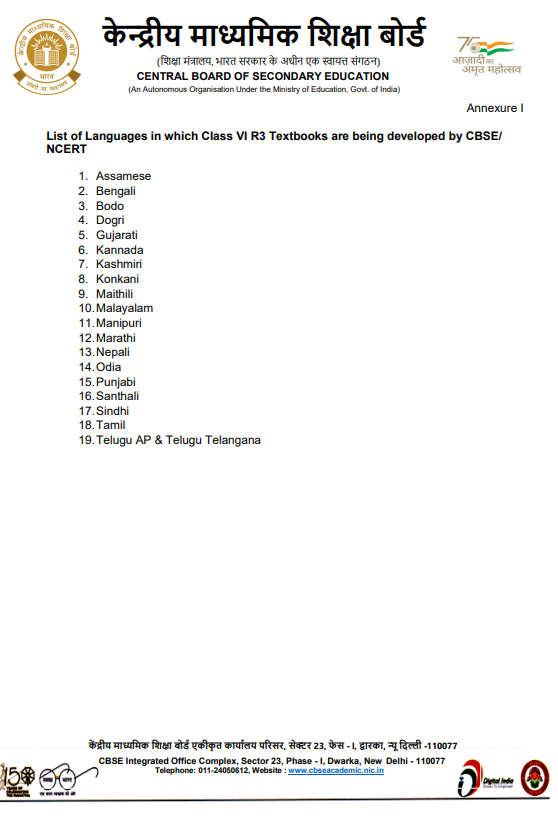
CBSE is preparing books in 19 languages for third language.
CBSE and NCERT are preparing books for Class VI R3 in 19 languages. These include languages like Assamese, Bengali, Gujarati, Marathi, Tamil and Telugu.
The rule has been implemented in class 6th
The board had earlier issued a circular on April 9 making the three language policy mandatory for class 6th. Besides, instructions were also given to implement this decision within 7 days.
Maharashtra is the first state to implement three language policy
Last year, Maharashtra became the first state in the country to implement the three language policy. Studying Hindi has been made mandatory for children from 1st to 5th class in the state. The rule is applicable in all Marathi and English medium schools of the state.
New education policy 2020 was brought after 34 years
The New Education Policy 2020 (NEP 2020) was approved by the Government of India on July 29, 2020. This is a major change in India’s education policy after 34 years. The previous policy was made in 1986, which was updated in 1992. Its objective is to adapt India’s education system to the needs of the 21st century, so that students get practical knowledge and learn skills.
The Center has set a target till 2030 to implement the new education policy. Education is a subject of the concurrent list in the Constitution, over which both the state and central governments have jurisdiction. Therefore, it is not necessary that state governments implement it completely. In case of conflict, both the parties have been suggested to resolve the dispute through consensus.
—————
Read this news also…
Anyone can check the copy on CBSE website: 19 year old student claims – Anyone can see the master password, there is no security on the portal.
A 19-year-old student, Nisarg Adhikari, has claimed that he hacked the CBSE website easily. Nisarg is a cyber security researcher. Nisarg’s blog has been posted by entrepreneur DD Das on his Twitter account. Read the full news…