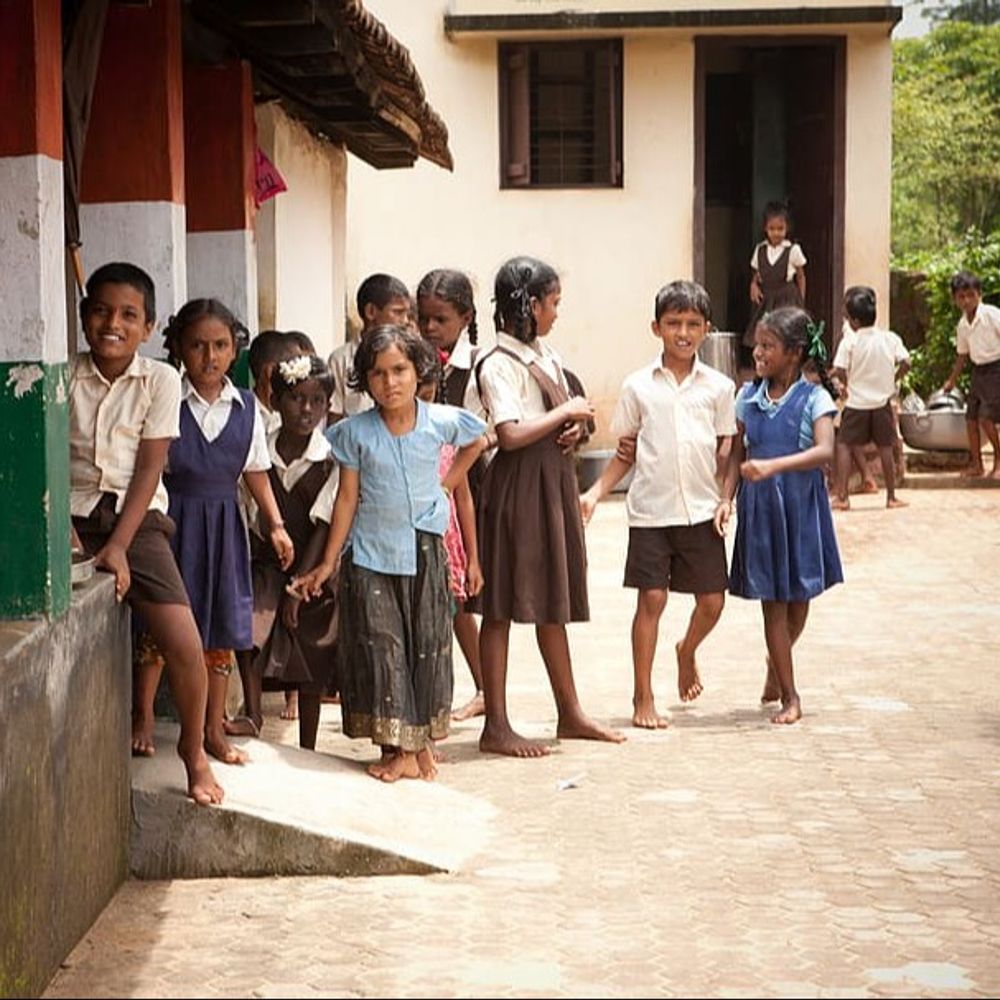
The Supreme Court said in its decision on Tuesday that private (non-aided) schools cannot refuse admission to children from weaker and deprived sections under EWS quota. Stopping them from admission is a violation of Right to Education (RTE). This will be a direct violation of Article 21A, the fundamental right of children to education. Justice P.S. The bench of Narasimha and Alok Aradhe gave this decision while rejecting the appeal of a private school in Lucknow for refusing to give admission to a student. Lucknow Public School had refused to give admission. A private school of Lucknow had challenged the order of Allahabad High Court, in which Allahabad Court had ordered the school to give admission to the girl child in EWS quota. In fact, Lucknow Public School had refused admission to a student raising questions on her eligibility despite her name being in the state final list. Against which an application was filed in Allahabad High Court but Allahabad High Court upheld the order of giving admission and asked the school to give admission. Hearing was held in SC against the decision of Allahabad High Court. The school had filed an appeal in the Supreme Court against the decision of Allahabad High Court to grant admission. Hearing this, the SC emphasized in its decision that the ‘Right of Children to Free and Compulsory Education Act 2009’ (RTE) is not just a law but a ‘national mission’. Under this, it is compulsory to reserve 25% seats in private schools for children from weaker sections. According to the court, these are not just rules, but to promote equality, dignity and inclusion among children. For this, the concept of ‘Neighborhood School’ i.e. teaching the nearby children together has been introduced in RTE. This will end social distance and discrimination. The court clearly said that delay or denial in admission hinders the child’s education. It weakens his fundamental rights. Therefore, schools should first give admission and then raise objections. Instead of doing the opposite. 25% seats reserved for EWS/DG/CWSN The Right of Children to Free and Compulsory Education (RTE) Act was passed in 2009. Under its section 12(1)(c), at least 25% seats in private non-aided schools were reserved for minority and reserved categories. In private and non-aided schools, at least 25% of the seats in new admissions i.e. entry level classes like Class 1, or pre-primary, are reserved for children from reserved categories. These 25% seats are usually divided among three types of children. EWS (Economically Weaker Section) includes children who are declared economically weak by the Central/State Governments on the basis of their income and economic status. DG (Disadvantaged Groups) generally includes children from sections that are considered socially and educationally backward, such as SC/ST/OBC (NCL – Non Creamy Layer). CWSN (Children with Special Needs) includes children with disabilities or special needs. 22% seats are reserved for both EWS and DG together. Apart from this, 3% seats are reserved for CWSN. The school fees of these children are arranged by the state governments. What is the application and selection process for 25% quota? To apply for 25% quota, parents have to fill the online form for their child. In this entire admission process, the school does not have the right to refuse any child or give priority to anyone else. The school is bound to give admission in 25% quota to the children allotted through lottery in the state list. ———————— Also read this news… Everything was looking blurry 2 days before the exam: Anishka, who could see only 10% of the world, scored 92% in CBSE, studied with a magnifier device. Anishka Goyal is able to see only 10% of the world, that is, she is 90% visually impaired. Still, he has performed better than most students in CBSE. Anishka from Hathras, Uttar Pradesh has secured 92.6% marks in CBSE 10th board this year, that too not from any quota, but from the general category. Read the full news…
Source link